By Jun Qi Tee (Learning Technologist)
As we enjoy the summer, it is time for us to look ahead – preparing our courses for the next year and enhancing our students’ learning experience. Whether you’re making changes from an existing module or designing a new one, this is the perfect time to reflect and reimagine your teaching using the digital platform.
Reflect on the Past Year
Before diving into planning, take a moment to reflect:
- What worked well?
Were there particular activities, assessments, or resources that students responded positively to?
- What are students expected to learn?
Do the assessments enable students to effectively demonstrate their skills or knowledge gained throughout the module?
- What surprised you?
Sometimes the most valuable insights come from unexpected student behaviours or outcomes.
Tips on preparing your module in Blackboard
- Consider the structure of your module
The Blackboard Ultra module template provided at the University of Derby is a useful base for you to arrange your learning materials for students using a consistent structure. Keep in mind how you name your documents or folders within the module, putting in meaningful titles instead of just ‘Week 1’ or ‘Chapter 1’ will help your students navigate and search within their modules more easily. Descriptions can also provide additional context for the modules or folders, but we recommend that it is kept to 1-2 sentences, so it does not make the experience too text-heavy for students using the mobile app to access their learning.
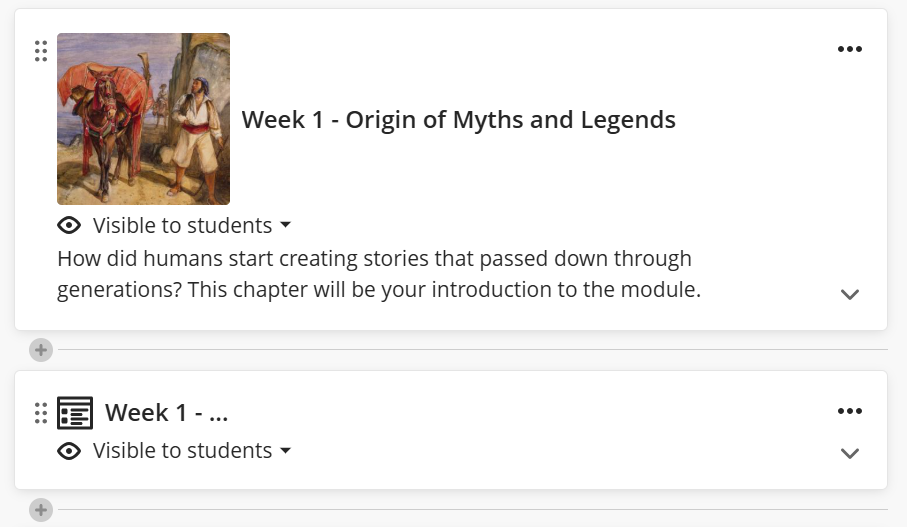
- Map out skills and expectations
The Develop@Derby Skill Set (UoD staff only) supports students in building their personal, study and employability skills and developing attributes for success in their university studies and beyond. It is comprised of ten skills recognised by industry, and we highly encourage that you map these skills in your module handbook for students to understand the expectations for them to develop these career ready skills relevant to their programme.
For example, encouraging students to develop their “adaptability” by demonstrating how their knowledge can be applied in different contexts is a highly valued skill for future employers. As a tutor, your assistance in providing resources and opportunities for students to develop these essential skills will be immensely helpful for their growth.
- Add multimedia resources and content
To help your students engage with the learning materials, consider adding infographics, pictures, blog links, images, videos, etc. The strategic use of these multimedia resources can be advantageous in helping students access or summarise complex information, explore case studies on external sites, or provide alternative learning modes (e.g. an audio podcasts or an infographic to summarise a complex process).
Interactive elements such as knowledge checks, polls and Blackboard Discussions are great ways for you to help your students engage with their learning and build their knowledge in bite-size chunks. This can help them identify areas they may need refreshers on, for certain topics or weekly content.
Collaborate with a Learning Technologist
Our Digital Learning Team (dls@derby.ac.uk) is here to support colleagues at the University of Derby with enhancing digital practice and can assist with:
- Module design consultations
- VLE use and optimisation
- Digital tools for assessment and feedback
- Embedding digital media into learning
- Workshops and drop-in sessions
Preparing for the new academic year should be more than just a checklist—it’s an opportunity to reimagine how we teach and how students learn. Take this time to make thoughtful updates, reach out for advice, and think about how you can make teaching and learning engaging for both you and your students.